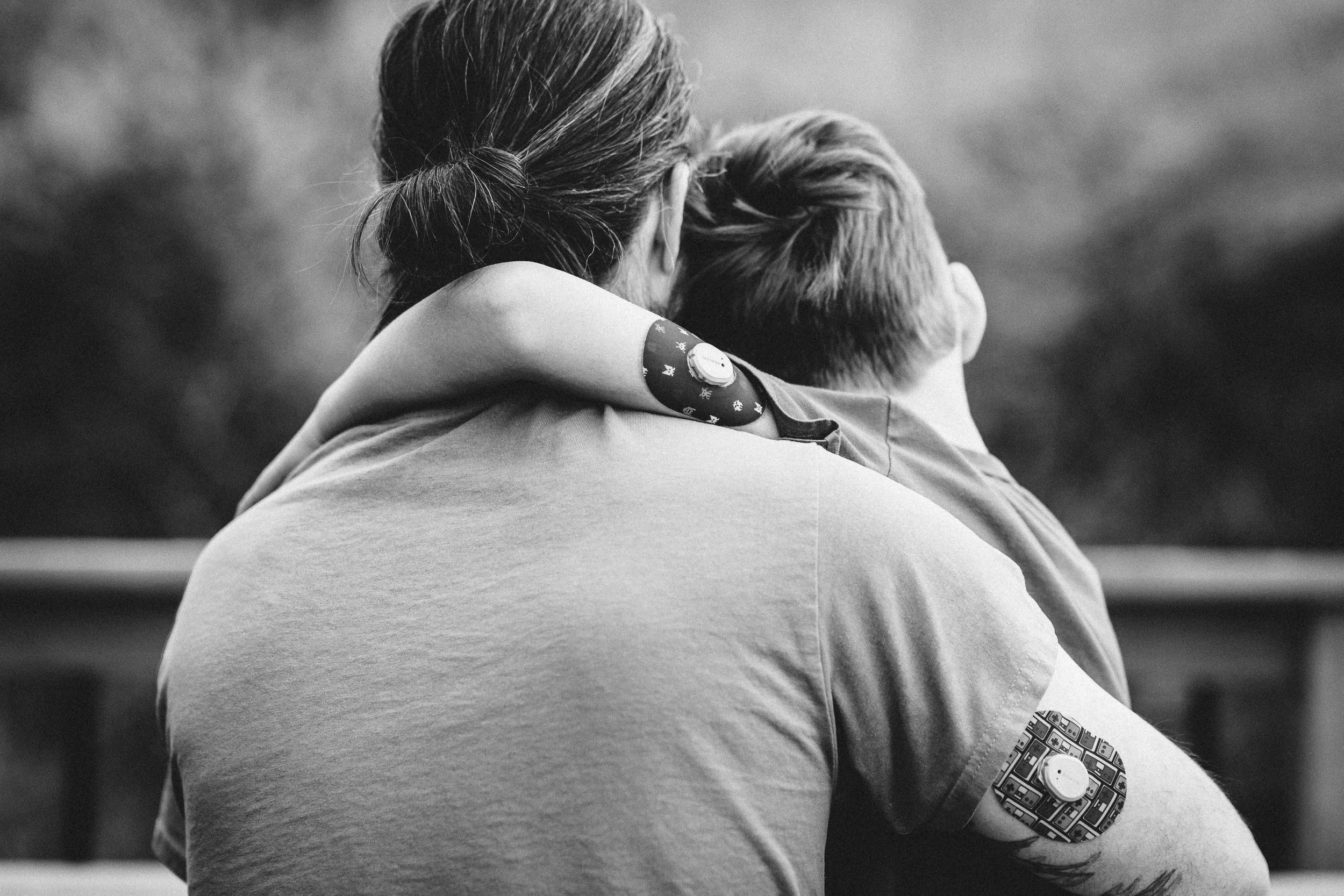
For fifteen years, my relationship with Type 1 diabetes had a clear boundary: I was the spouse witnessing the relentless, often invisible work of managing a disease my husband, Tom, has lived with for over four decades.
In 2016, I created a photo essay documenting Tom’s experience with T1D and my perspective as his spouse. The piece was subsequently featured by Beyond Type 1, where it reached a wide audience and resonated with readers around the world. Some shared it with family members to help them better understand the realities of T1D. Parents of newly diagnosed children told me Tom’s story gave them hope for their own kids’ futures. A decade later, I still hear from people who stumble across it.
More recently, T1D became part of our family’s story in an entirely new way.
Our son, Gus, tested positive for four T1D autoantibodies, placing him in Stage 1 of the disease. His blood sugar remains normal for now, but we know he’s on a path toward clinical diabetes. We just don’t know when. It’s an exercise in anticipatory grief: carrying the weight of what’s to come while feeling grateful for whatever time we have to prepare.
My heart breaks and swells in equal measure when Gus rolls up his sleeve to explain to curious kids on the playground what his Dexcom does and that, just like his dad, he will one day need insulin. He braves finger pricks and blood draws like a champ, reads children’s books about Frederick Banting, and helps his dad count carbs. We make a fuss over which cool patch to put over his CGM (currently, cats wielding lightsabers).
While I can’t know firsthand what it’s like to live with T1D, I’ve spent years immersed in this community, learning from those who do. In online T1D spaces and support groups, I’ve laughed, cried, swapped tips, celebrated victories, been talked off ledges, shared supplies, and practiced radical hope. Sometimes all in the same day. I’ve seen how fiercely this community shows up for one another.
What began as an effort to tell one person’s story has become something much bigger for me. I’ve learned how powerful it can be when people recognize themselves in someone else’s experience, when complex information becomes accessible, or when a story makes someone feel a little less alone.
Areas of Interest
Patient Advocacy · Creative Strategy · Visual & Narrative Storytelling
Health Communications · Patient & Family Engagement · Community Building